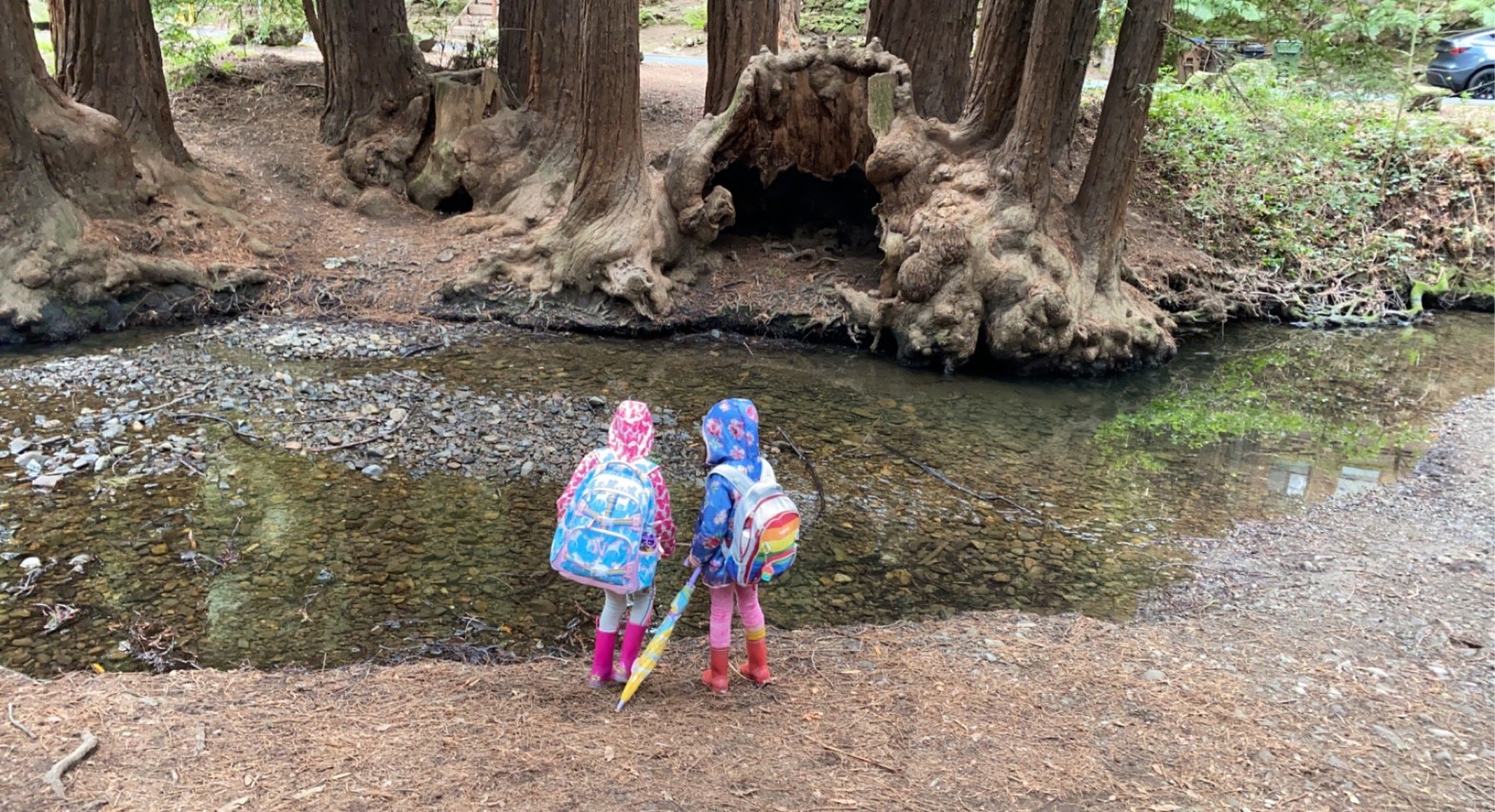
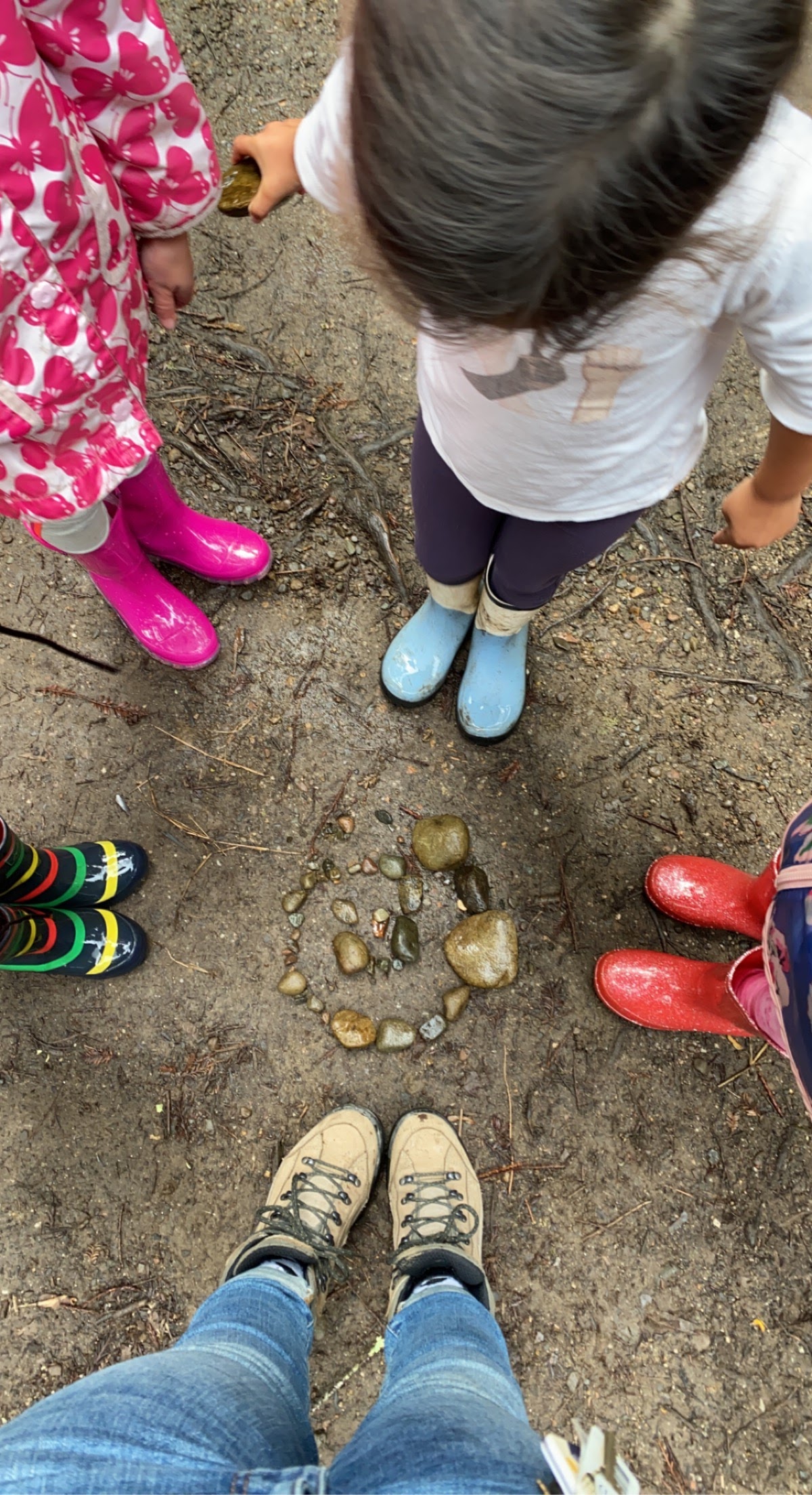
This week was a very gloomy and rainy day in Marin. But, that didn’t stop us from having a wonderful day of exploration. This week we settled in at Old Mill Park. We started off our day by heading down to the creek to examine the water levels. We found ourselves fascinated with all the river rocks. We talked about their shape and how they had smoothed out over time. We skipped rocks, made rock sculptures and even attempted to make a dam.
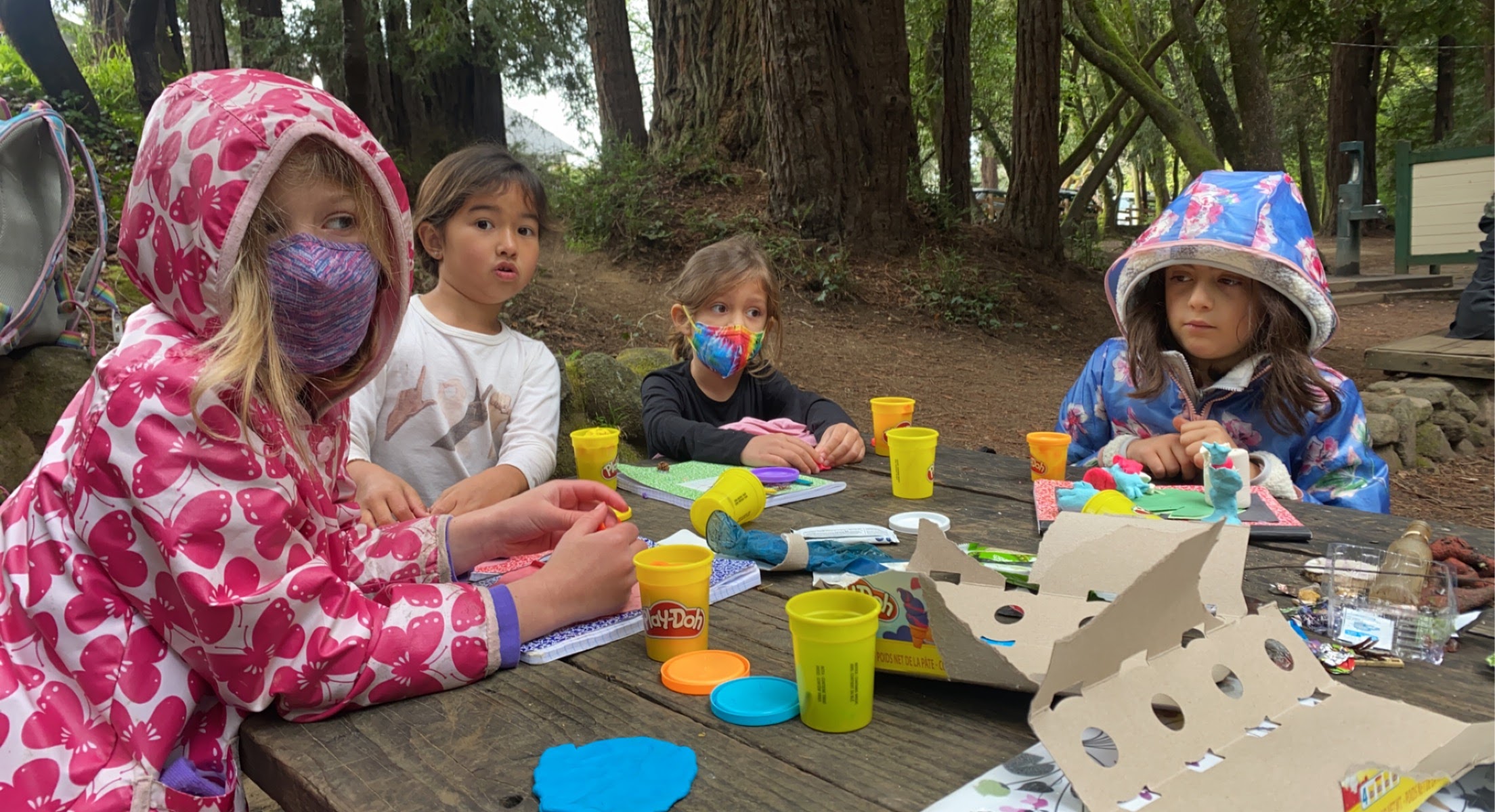
This week we reviewed some basic parts of a flower. We made play dough replicas of our flowers, and included pistils (female part) and stamen (male part). We talked about how flowers come from other flowers and pollinators take pollen from the stamen of one plant and bring it to the pistils of another flower.
We did a fun little pollinator demo to recreate this method of reproduction. Everyone was given a plate with a bit of colored jello powder. Then everyone was given a pom pom (to represent our pollinators.) Our pollinators skipped from flower to flower (everyones plate) in order to mix up the jello colors. It was a fun recreation of how pollinators work. We also learned that flowers can pollinate through wind and water as well. We touched on some different types of pollinators, such as bees, beetles, birds, ants, bats, and even some larger animals. We talked about many pollinators are considered to be a keystone species, because so much our eco system depends on them. They are they key to our perfect eco system.
After lunch we headed on over to the Old Mill Library, where everyone got to pick some amazing books. The librarian was so happy to help all the kids find their perfect books. The kids really enjoyed learning a bit more about library systems. We checked out a few books on pollinators and headed back out for our last project.
We collected a bunch of sticks, and pinecones. I showed the kids how to tie their sticks together with some string and twine. We then plopped on some peanut butter and sunflower seeds. It was really fun making our very own abstract bird feeders. After making them, we learned about how seeds are protected with their outer sell. This is opposite from pinecones (naked seeds). We did some guessing as to why it would be helpful for the seeds to be protected. We also learned how to open sunflower seeds to eat them.


How to continue the conversation at home:
- What kind of pollinators do you see on any given day? What would happen if those pollinators weren’t around?
- Bees get pollen stuck on their bodies. Their hair makes the perfect velcro to transport pollen. What kinds of things get stuck in your hair? Their legs even have specialized hairs to capture extra pollen.
- How are other kinds of seeds protected? Think about fruits. Seeds can look really different from plant to plant.
- Some Vegetables are actually fruits because they contain the seeds of the plant. Can you think of any examples? Vegetables are actually parts of the plant. What are some examples of vegetables and what part of the plant are we eating?
 Walking Into Wellness Education Camps